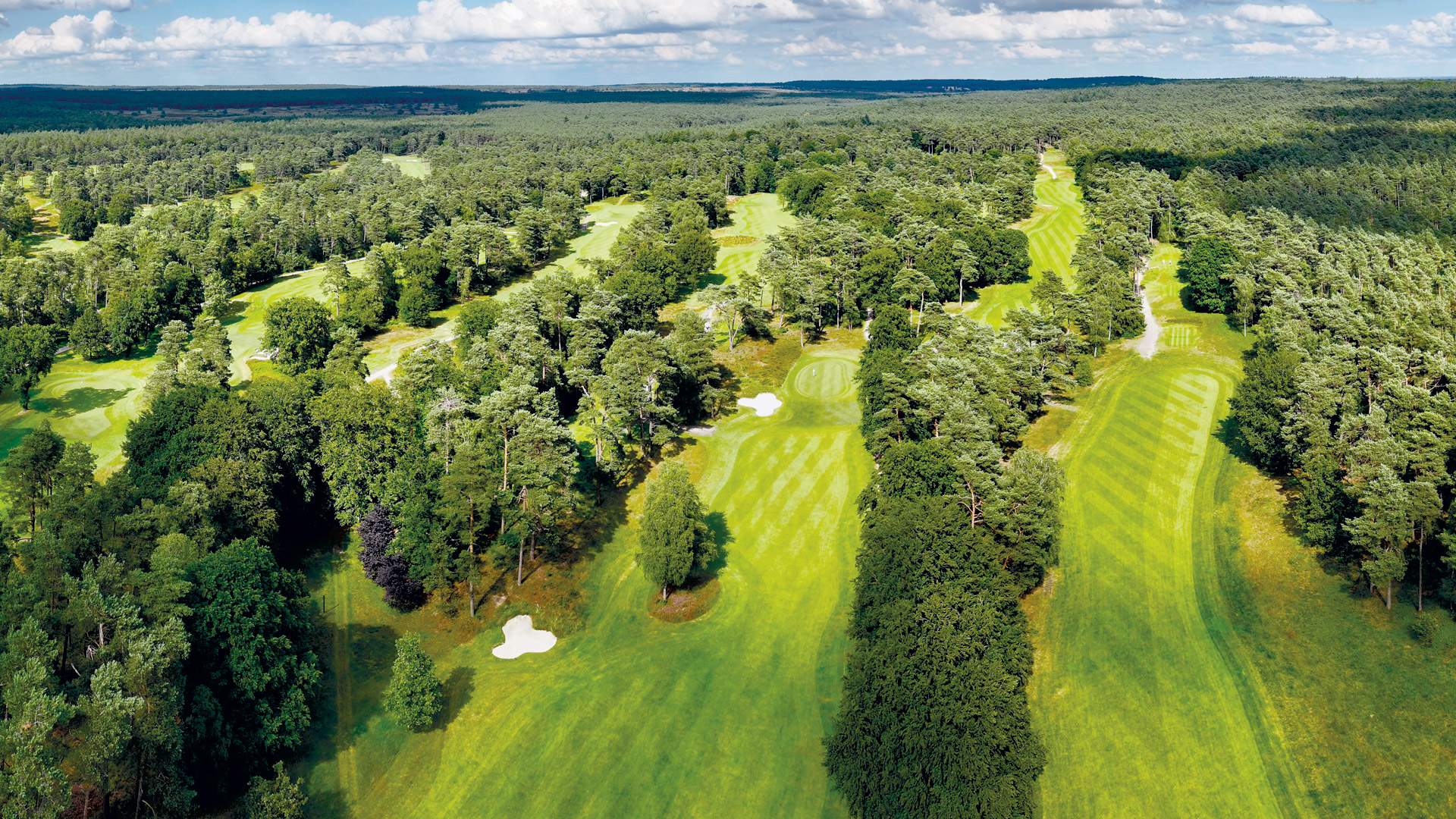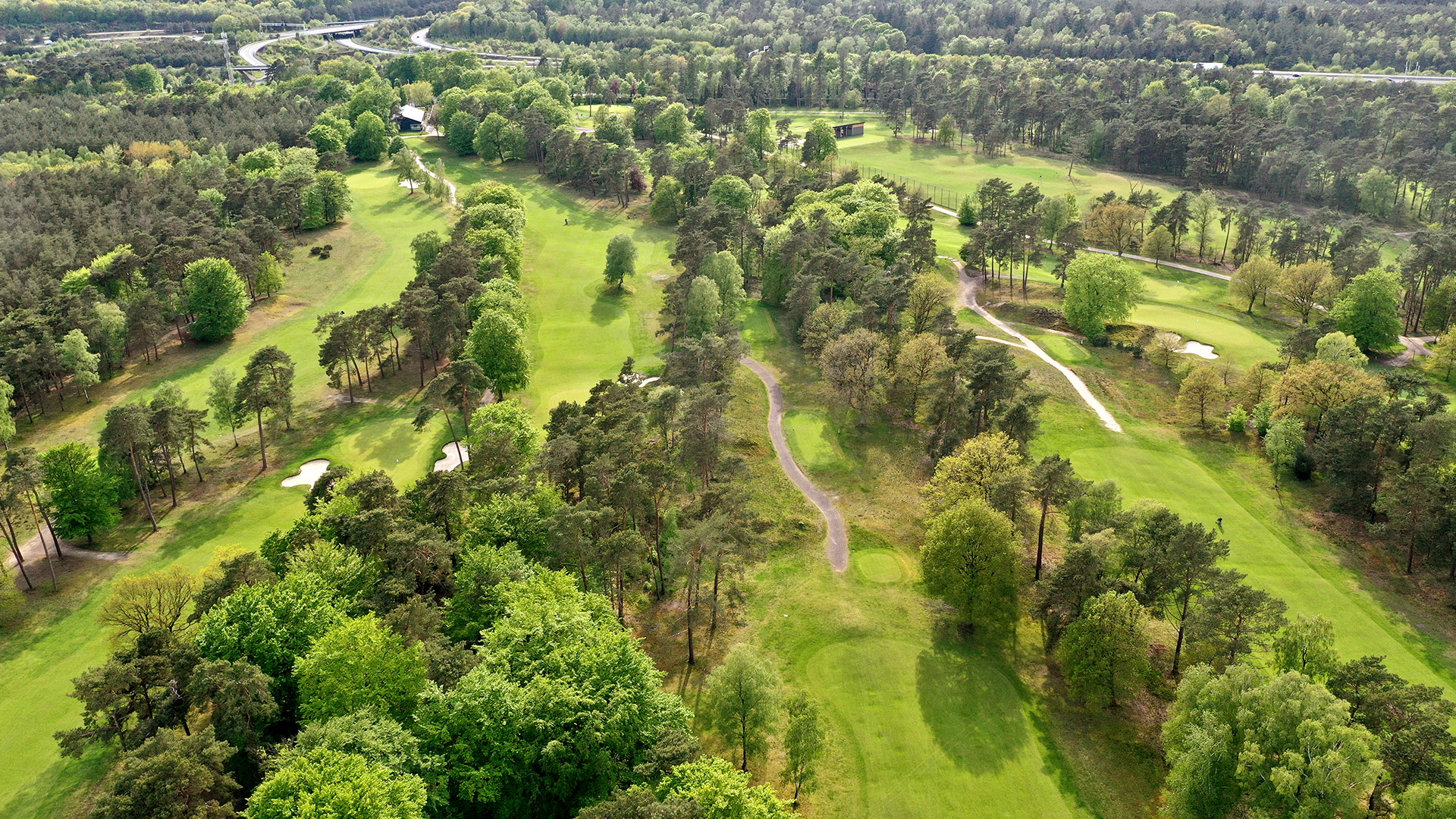
Een authentieke 18-hole championship course in een natuurlijke bos en heide omgeving.
HOLE 1
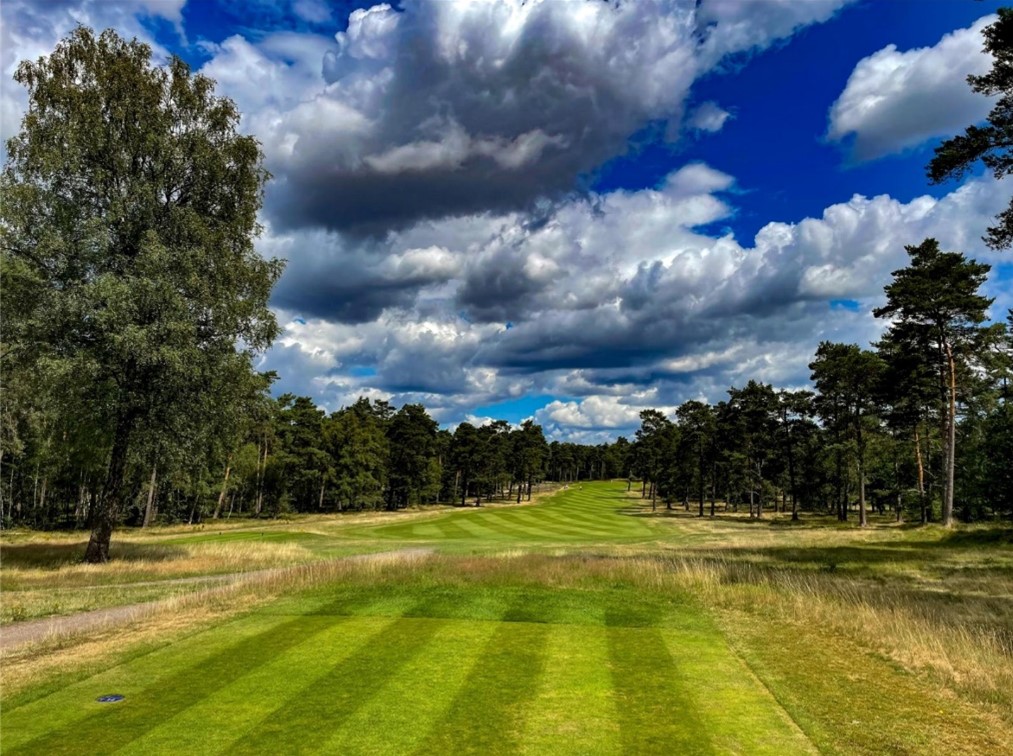
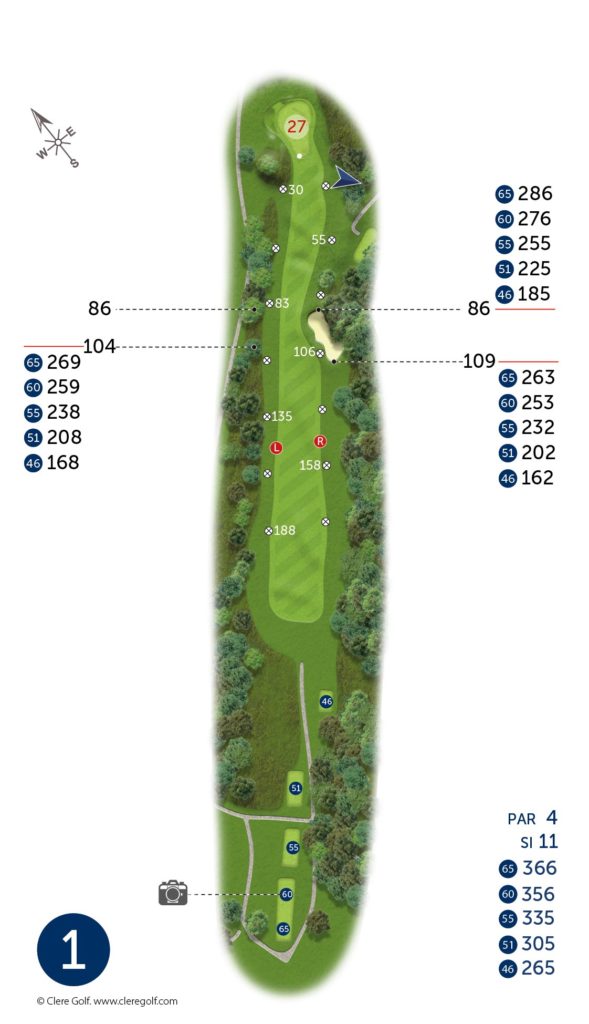
The teeing ground of the first hole is located next to the clubhouse, with spectators viewing from the terrace. Against the rhododendrons to the left of the tee stands a concrete bench from 1925, donated by Aalbrecht A. del Court van Krimpen. Upon teeing off, players are immediately aware of the hole's challenges. The view of the fairway is partially obstructed by a heather-covered hill. Additionally, large beech trees flank both sides of the forward tees, penalizing errant shots from the back tees. One hundred meters from the green, a bunker is situated on the right side; for long hitters, this presents an additional challenge on their tee shot. The slope behind the bunker descends to the left towards the green; the left side of the green is protected by a large oak tree. The green is challenging; its slope runs from right to left and from front to back.
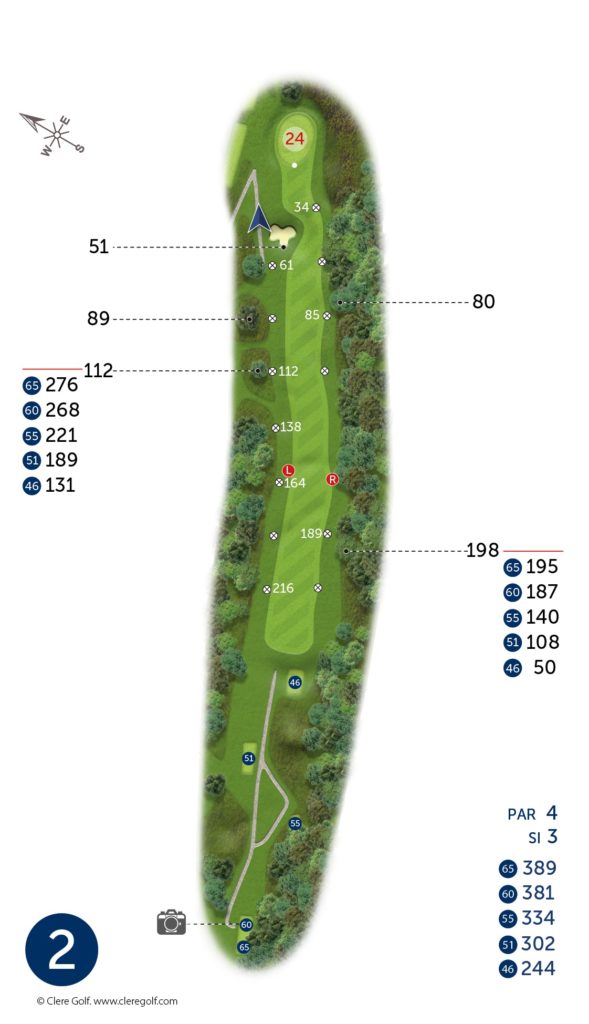
HOLE 2
The second hole is one of the most challenging holes on the course. From the back tees, players face a blind shot to the fairway over a hill at the height of the forward tees. A bunker is situated to the left of the green; a slope directly in front of the green provides additional roll towards the green. When approaching the green, the right side offers the optimal line. The green is expansive and slopes upwards towards the back.
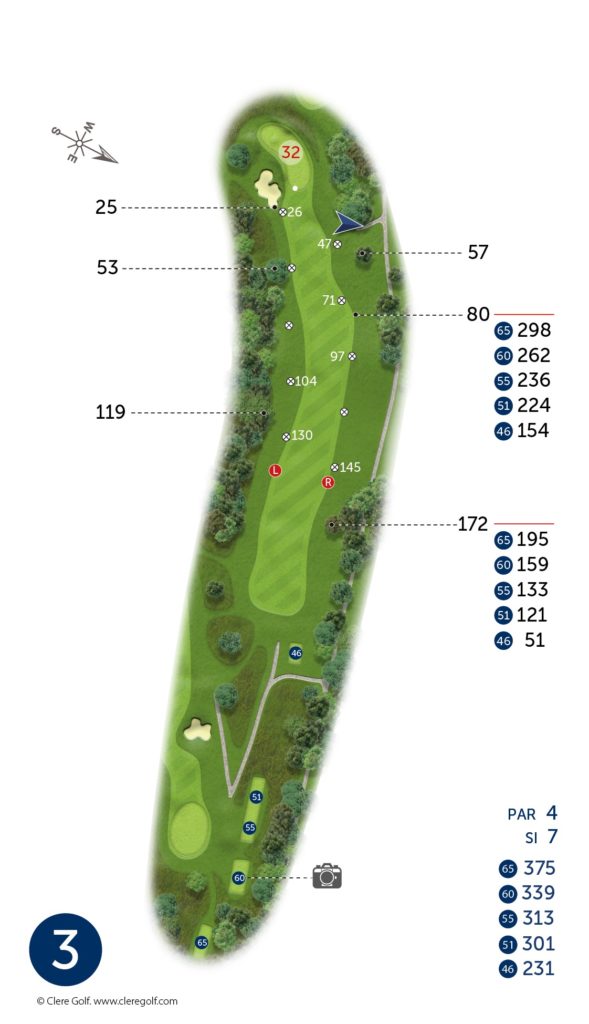
HOLE 3
From the back tees, the player is presented with a fantastic view of the hole. Hole 3 features a dogleg to the left with a blind shot to the green. The green is situated on a plateau and is guarded on the left by a bunker; golf balls landing to the right of the green are penalized by a steep slope descending to the right and a row of trees.
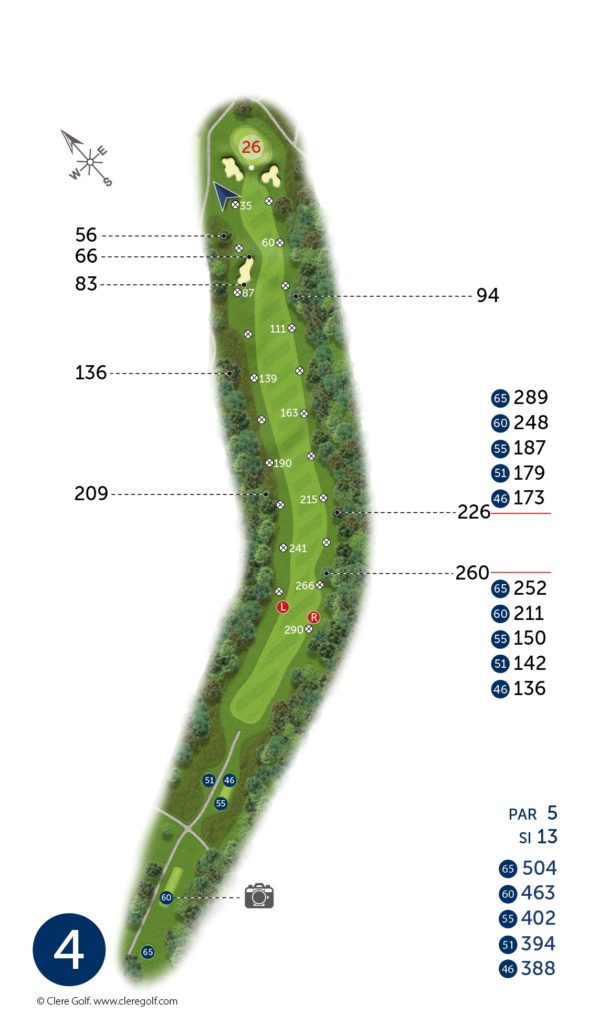
HOLE 4
The first par 5 on the course features a dogleg to the left. Players who keep the ball too far left off the tee, attempting to cut the dogleg, will encounter difficulties with their second shot. From the bend, the fairway ascends; a fairway bunker on the left comes into play on the second shot. The green is characterized by two tiers and has bunkers on both sides.
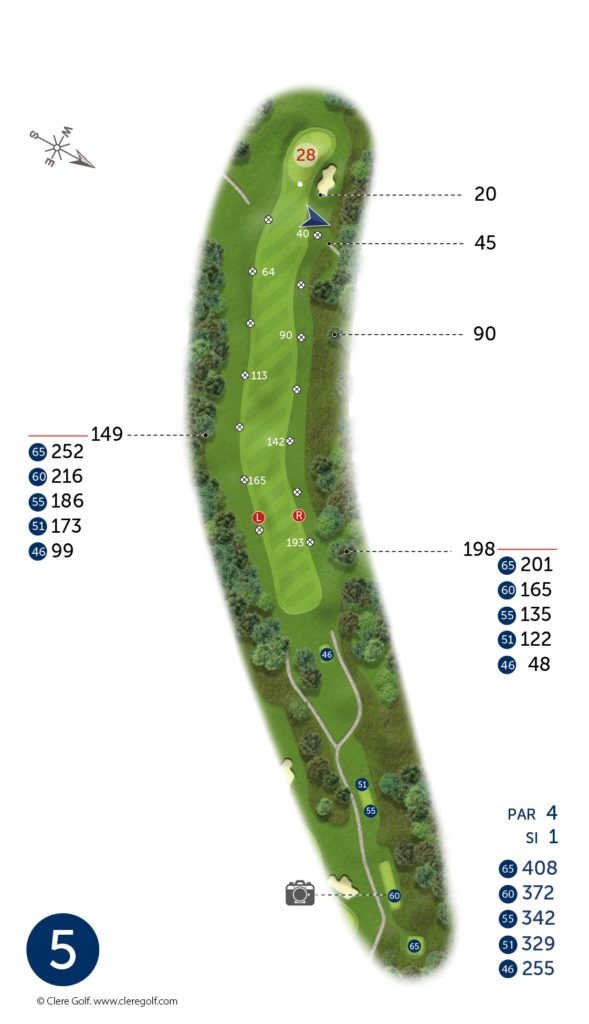
HOLE 5
The fifth hole is a par 4 with a dogleg to the right. The most challenging hole on the course, despite its deceptive simplicity. To reach the fairway, players must carry the ball over a heather-covered hill. The pine forest to the right penalizes errant shots; cutting the dogleg is reserved for true long hitters. The fairway slopes to the left, providing players with a more advantageous line to the green. A ridge divides the green into left and right sections. A bunker is situated to the right of the green.
HOLE 6
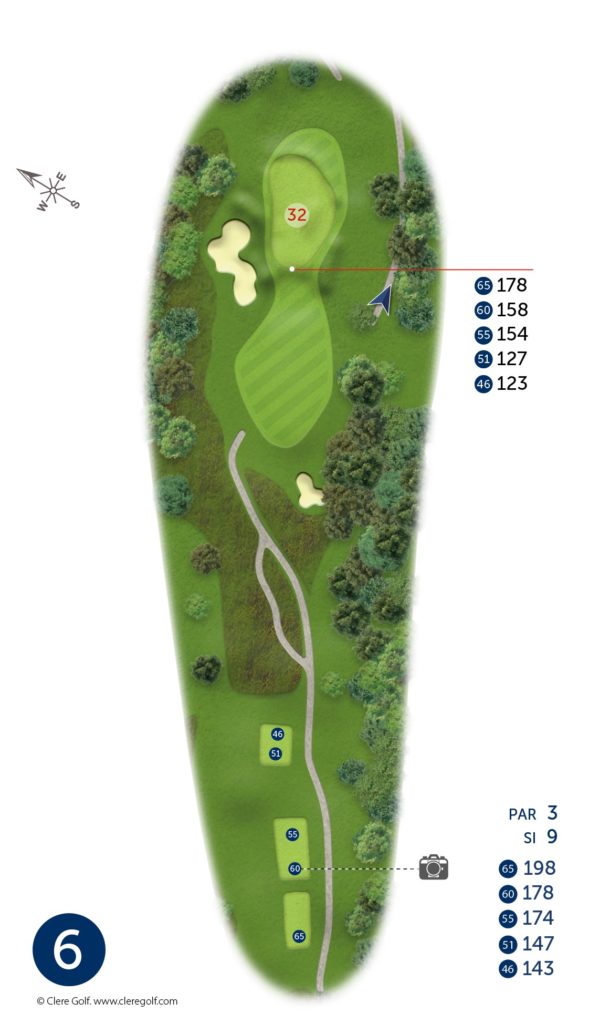
The sixth hole is a par 3 that was opened in 2014. The view of the green suggests a more challenging shot due to the heather and visible bunkers; the approach area is approximately 60 meters deep. The left bunker guards the large, somewhat deep green. Behind the green, a deep runoff area ensures that overly long shots inevitably roll all the way to the bottom.
HOLE 7
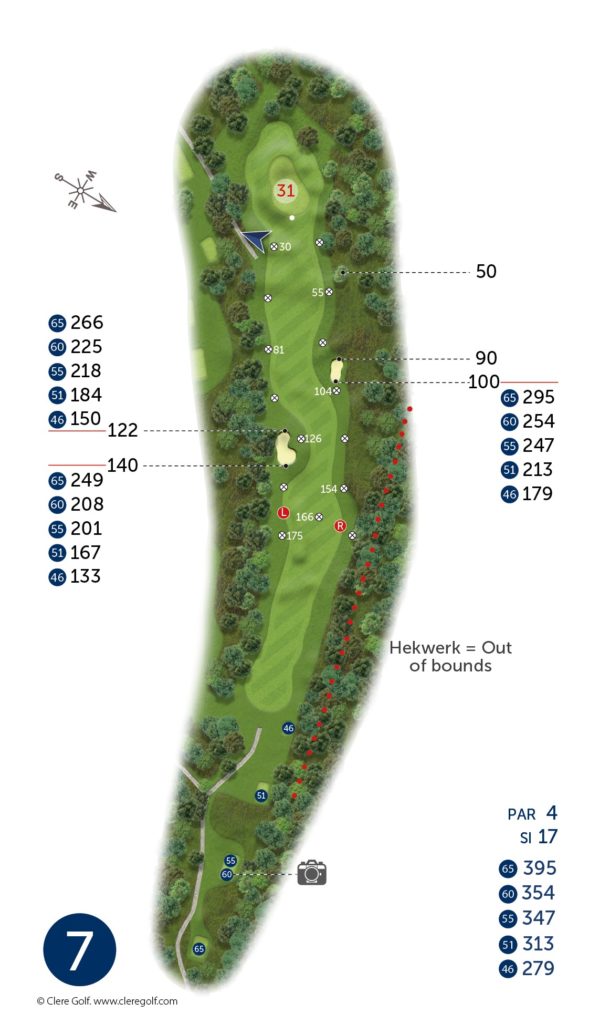
Hole 7, a par 4, is the second new hole that was opened in 2014. It features a slight dogleg to the left. To the right, the fence marks the boundary of the course. Long hitters will need to account for the two fairway bunkers. The green is generously sized and features the characteristic “Rosendaelsche” undulations. To its left, a treacherous runoff area extends from front-left to back-right: shots too far left and/or too long will be penalized.
HOLE 8
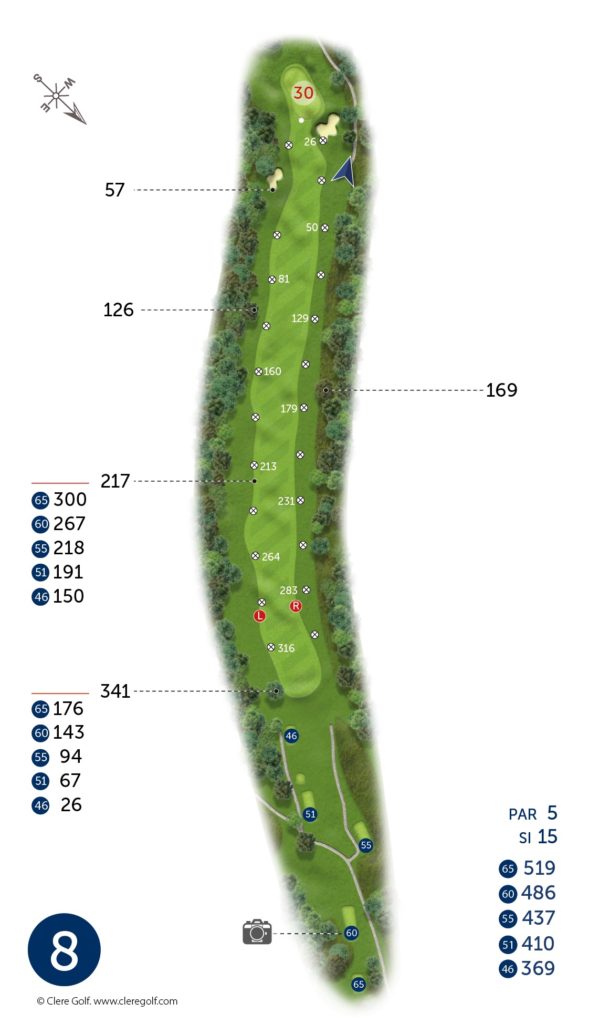
Hole 8 features a slight dogleg to the right and is the longest hole on the course. From the tee to the start of the fairway lies an expansive heathland. The heavily undulating fairway ascends towards the green, which is guarded by two bunkers. The first bunker is located 60 meters to the right of the green, while the second (deep) bunker is positioned directly in front of the green on the right. When approaching the green, players can utilize the mound to the left of the green. The renovated green, brought into play in 2000, is the largest on the course and is constructed with multiple tiers.
HOLE 9
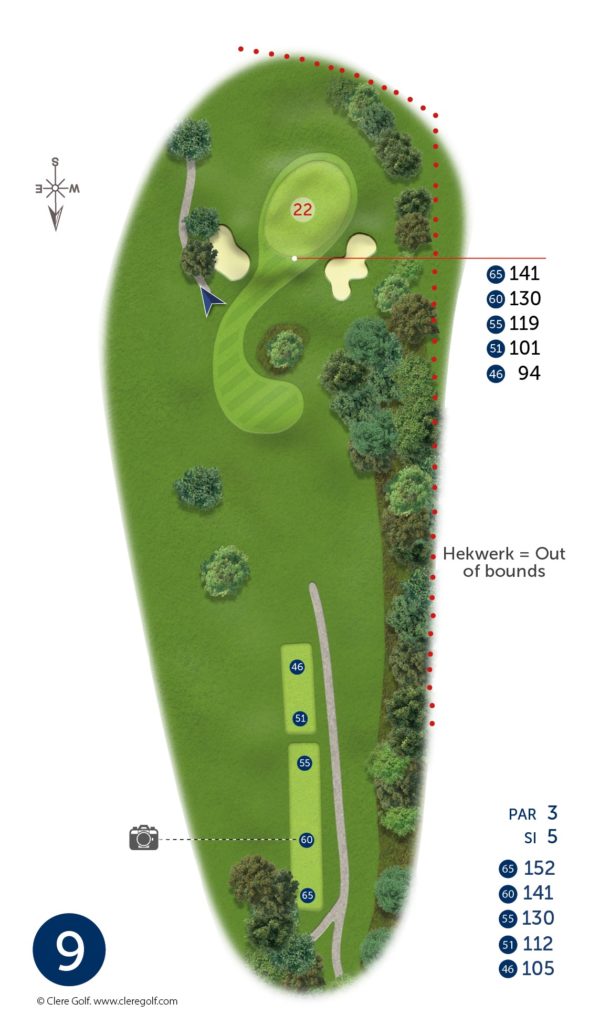
The ninth hole is a short par 3. The green is situated on a plateau. In front of it, a large pine tree obstructs the approach shot. Bunkers flank both sides; overly long shots will disappear into a grass bunker at the rear. The green appears flat, but it is not. Described by the architect as an “optical illusion”; do not be surprised if your well-struck putt narrowly misses the cup.
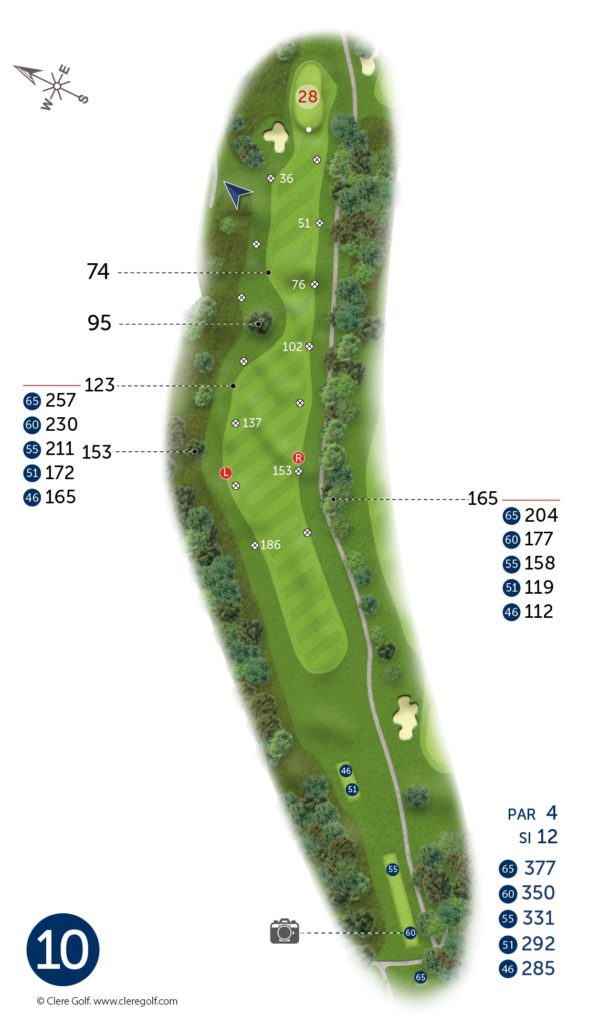
HOLE 10
Hole 10 features a slight dogleg to the right. At the bend, near the 150-meter marker, branches partially overhang the edge of the fairway. Approximately 120 meters from the green, a small, tree-covered mound is situated in the middle of the fairway. Players whose tee shots land left or are too long will consequently have their approach to the green partially obstructed. In front of the green, to the left, lies a bunker with a heather mound behind it. To the right, there is a shallow runoff area. The green is long and very flat.
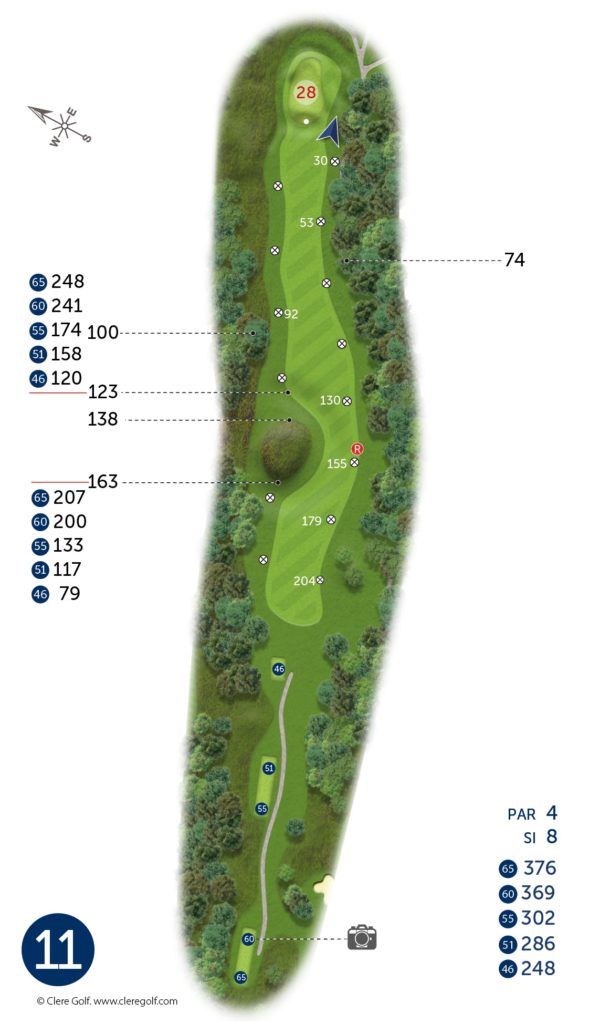
HOLE 11
From the back tees, players cannot see the green due to a large mound located 150 meters away. To the right of the mound, a narrow passage leads to the wide fairway. From this point, the flag is visible. The fairway gently slopes down towards the green. Instead of bunkers, the sides of the green slope steeply to the left and right. Behind the green to the left, the slope is steepest, causing an over-rolled ball to come to rest deep down.
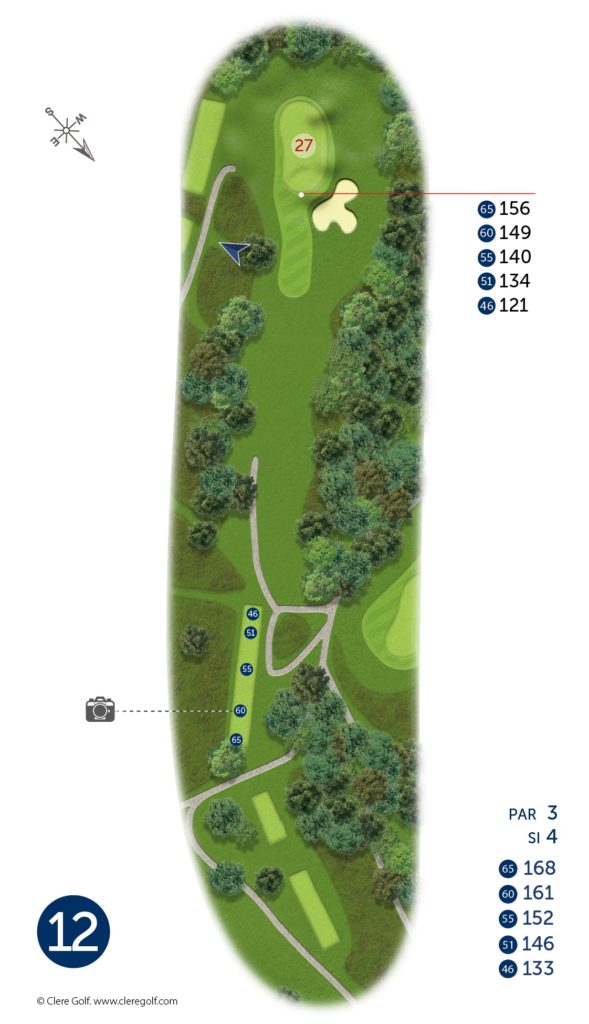
HOLE 12
This par 3 ascends to an elevated green, playing longer than its stated yardage suggests. The passage is narrowed by pine trees flanking both sides of the fairway; while there is more space around the green, a treacherous rough lies to its left. The undulating green of hole 12 was constructed in 1998 and slopes significantly upwards towards the back; overly long shots will result in a challenging downhill putt.
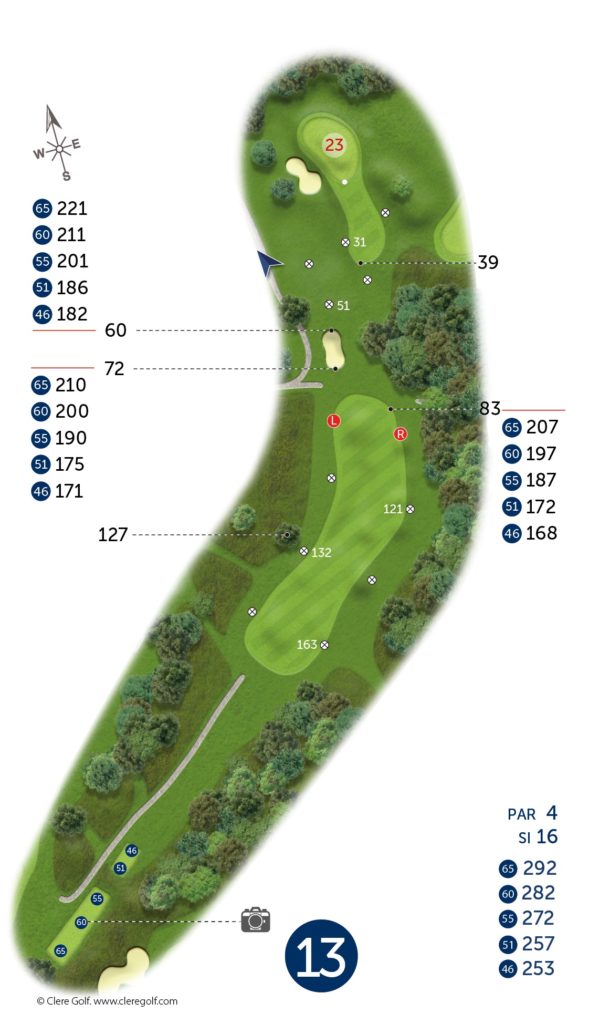
HOLE 13
Hole 13, a short par 4, is considered by our members to be the most beautiful hole on the course. From an elevated tee, players drive the ball to a lower, undulating fairway with a slight dogleg left. The green, situated on a raised plateau, is narrow in design and requires a precise approach. Players who approach the green too aggressively are penalized by the long rough behind the green or by the left bunker. The long apron provides a safe landing area for the second shot.
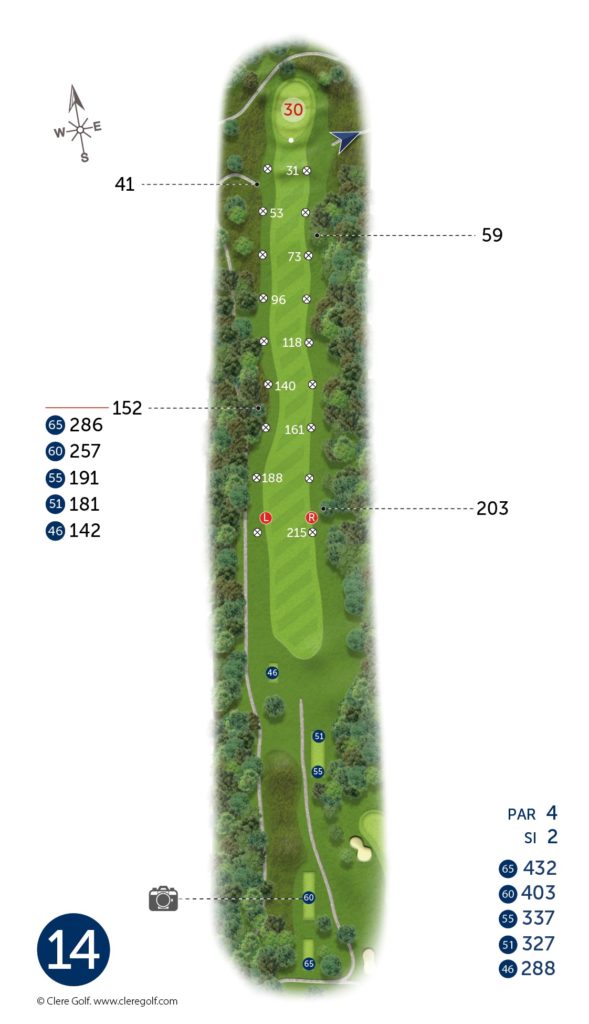
HOLE 14
Hole 14 presents a challenge for all players. The length from the back tee to the green measures an impressive 432 meters! In addition to its length, the numerous trees on both sides of the fairway test a player's skill; for long hitters, they make the course exceptionally narrow. Both the tee and the green are slightly elevated above the fairway. The green is tiered in three levels, rising towards the back. A short approach shot makes putting particularly challenging.
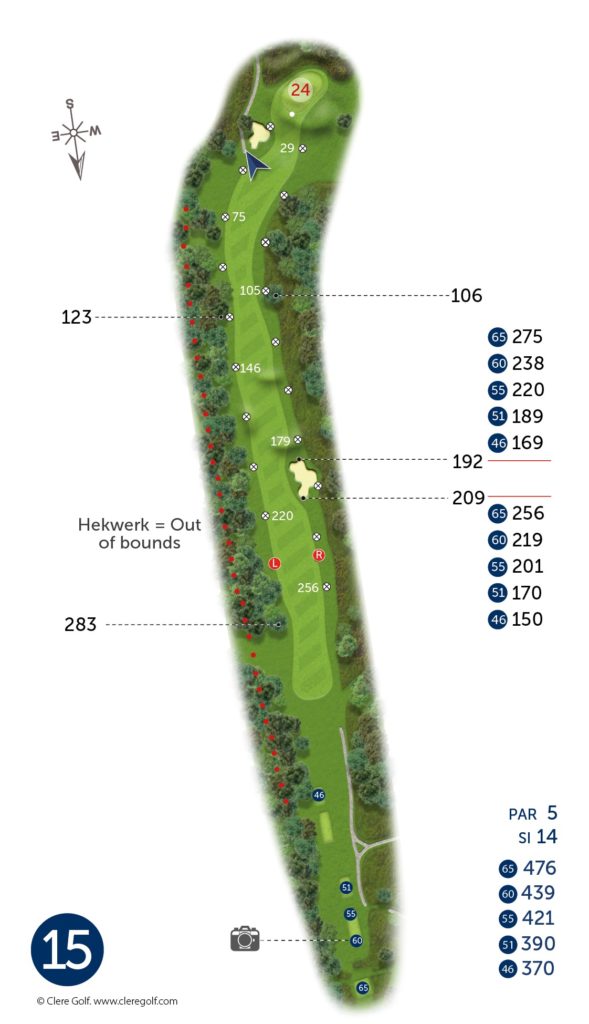
HOLE 15
The 15th hole is a par 5 with a dogleg right. The fairway is wide, with many trees and shrubs on the left, and trees interspersed with heather on the right, along with a fairway bunker that comes into play for long tee shots. At 150m from the green, the hole bends to the right, revealing the green situated on an elevated plateau. Astute players keep to the left side of the course to avoid being impeded by the pine trees on the right. A slightly long shot to the green is stopped by the mound behind it; a short approach shot will unrelentingly roll all the way back down. The green slopes up towards the back with a diagonal ridge in the middle, dividing it into two levels. After holing out, take a moment to look back and admire the beautiful view!
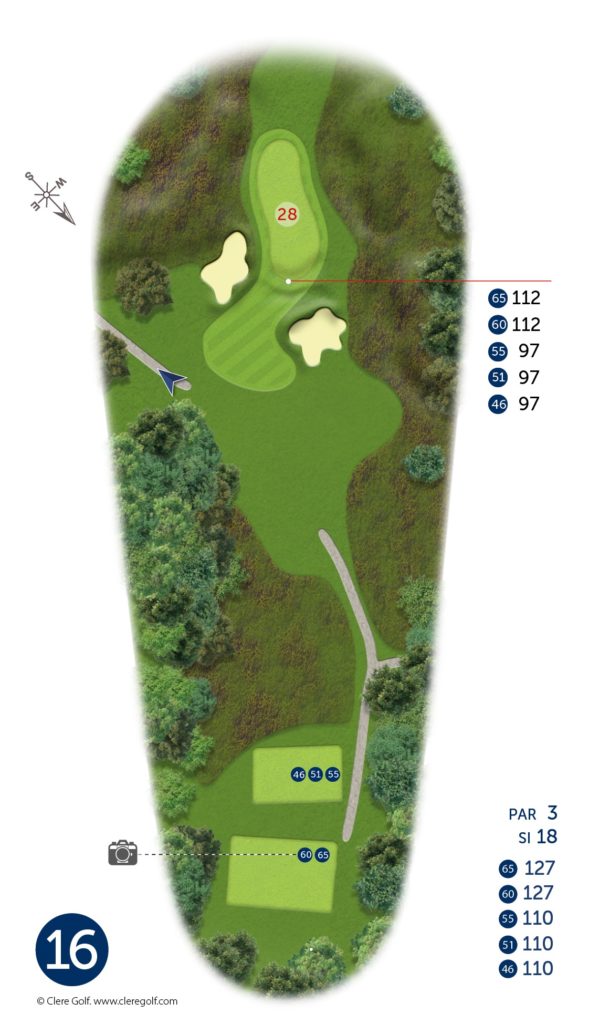
HOLE 16
Hole 16 is rated as the easiest hole on the course. From an elevated tee, players enjoy a fantastic view of this distinctive hole, acclaimed by many golf experts as one of the most beautiful par 3s in the Netherlands, if not the most beautiful!
The narrow green is largely encircled by heather mounds, while two bunkers complicate the approach shot. Club selection is therefore crucial.
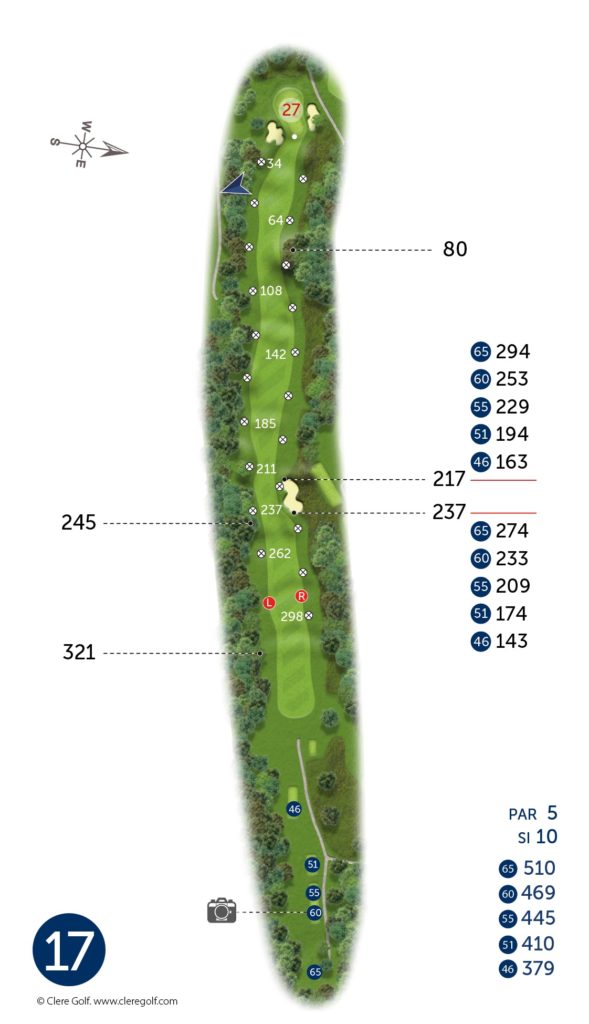
HOLE 17
The final par 5 on the course is characterized by a steeply undulating fairway leading up to a saddle. From the saddle, the fairway descends in various plateaus. Players who choose the left side are not affected by the large oak tree on the right during their approach to the well-guarded green, which features bunkers on both sides.
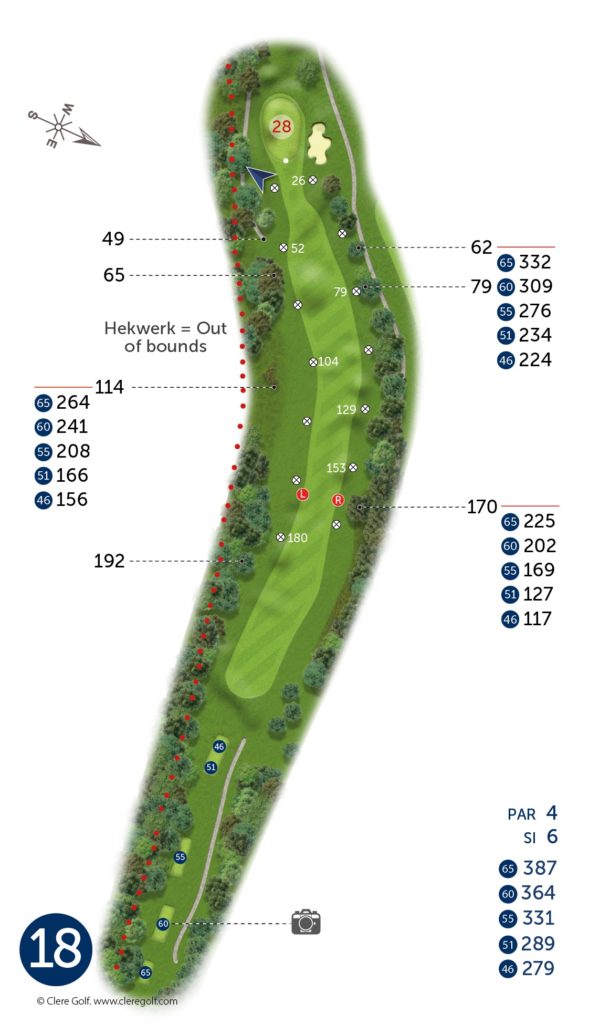
HOLE 18
The final hole features a sharp dogleg to the left. Through a narrow passage, players drive to a wide fairway that slopes to the right. Behind the small mound on the left, the rough extends considerably; players attempting to cut the corner often face a second shot from a difficult lie. At the bend, players can see the green. To the right of the large green are two bunkers, while the left side adjacent to the green is out of bounds. The birch tree on the right and the pines on the left demand extra precision on the approach.
Scorecard • Course Guide • Course Handicap • Local Rules • Course Record Men + Ladies.
Onze greens hebben 6 PINZONES die dagelijks worden aangegeven.
De Rosendaelsche biedt u een uitdagende 18-hole championship course met keuze uit 5 tees en afstanden.
Een natuurlijke bos-heidebaan aan de rand van de Veluwe. De baan voldoet aan de hoogste eisen. De baanstyling is natuurlijk, authentiek en minimalistisch. U heeft de keuze uit 5 tees: 65, 60, 55, 51 en 46. Op basis van uw golfniveau en swingafstanden bepaalt u de beste tee.
Onze tip: de holes zijn ontworpen om op elk niveau ‘in regulation’ te spelen, waarbij de fairway bunkers ‘in het spel’ komen. U kunt dus een tee naar voren spelen als u structureel niet in de dichtbij de bunkers en de greens komt. Ook is het leuk om tees af te wisselen en zodoende een andere baan te beleven.
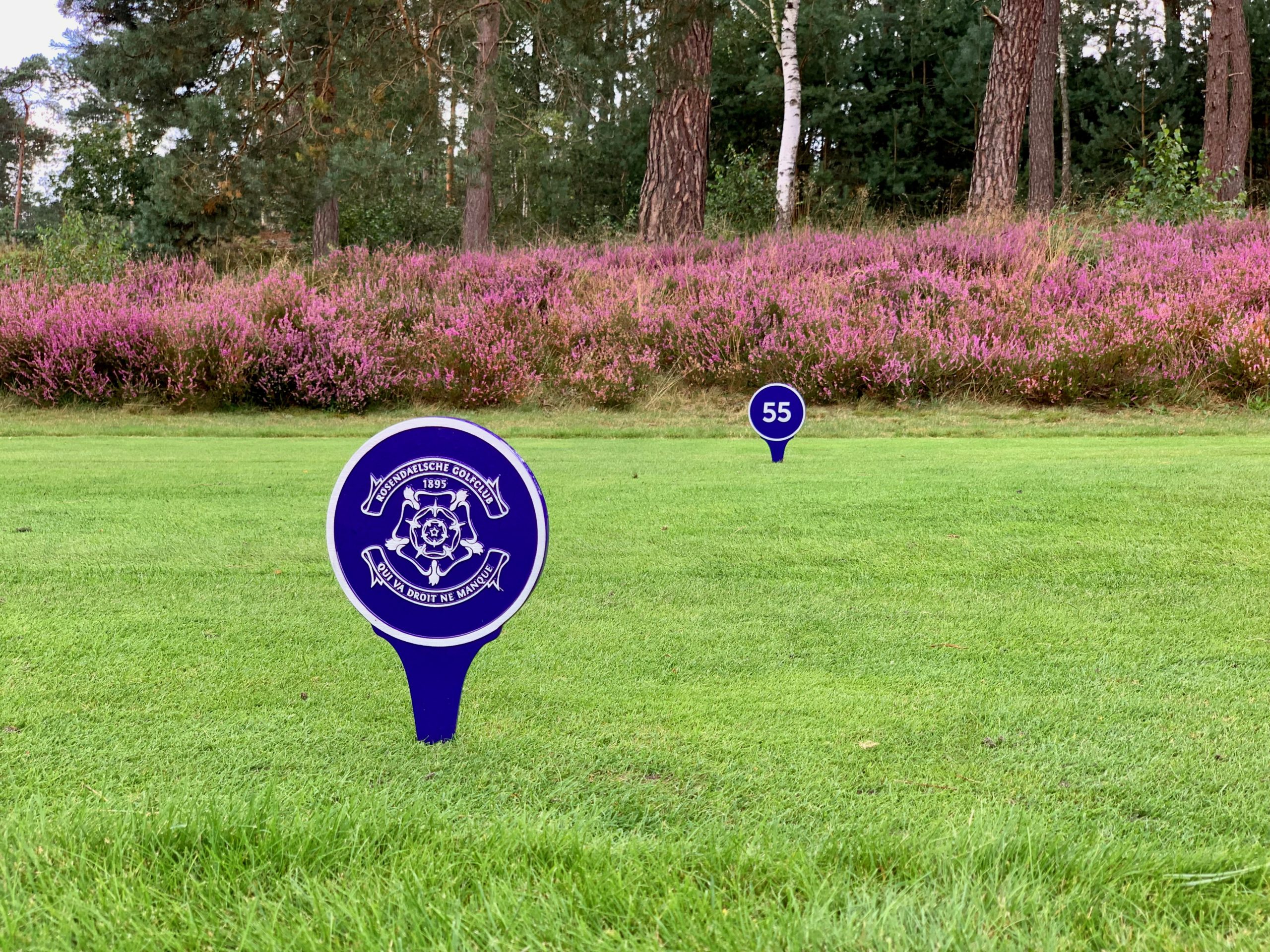
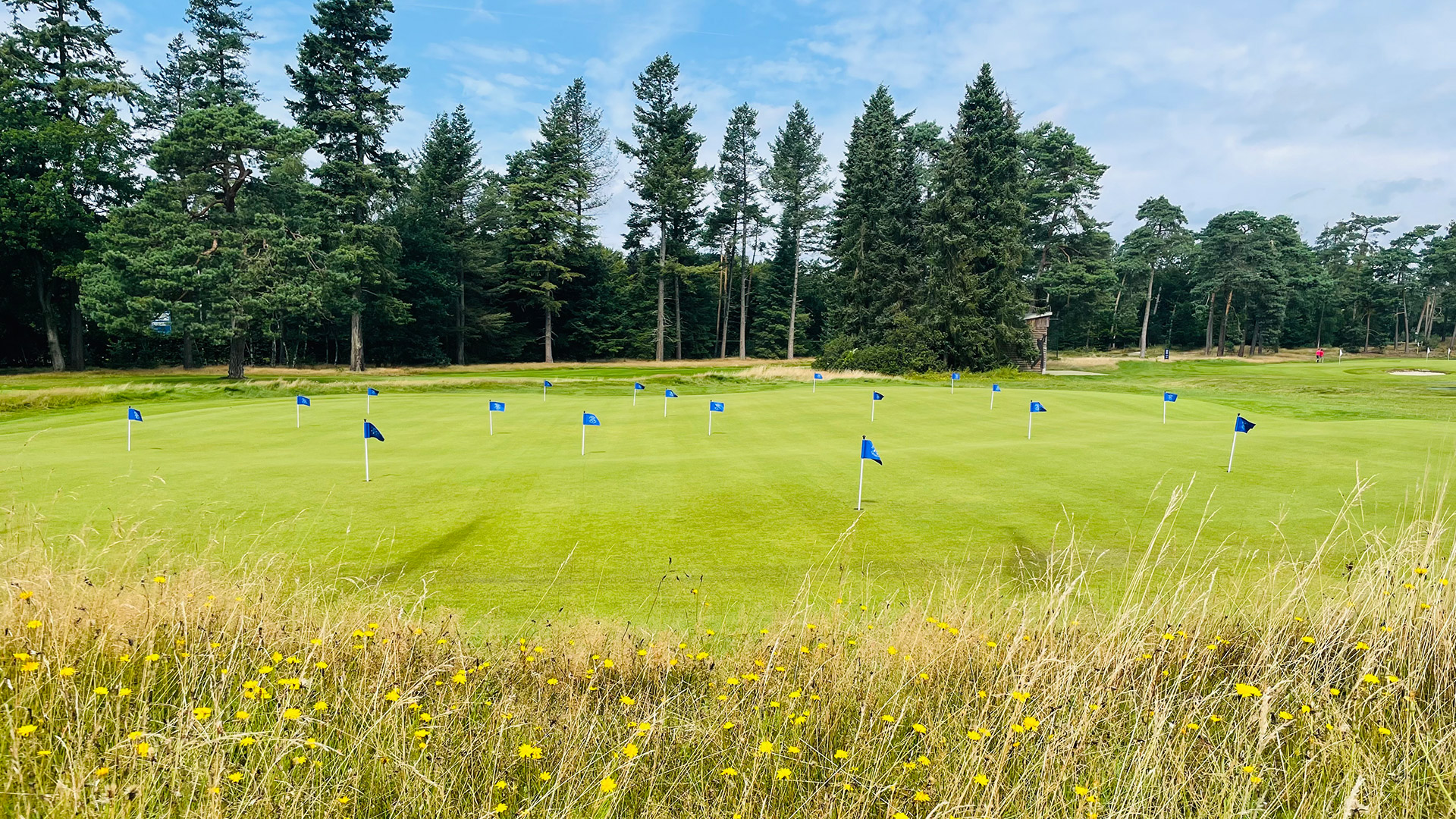
Op de Rosendaelsche Golfclub is oefenen een belevenis op zich.
De driving range kan aan de voorzijde en achterzijde benut worden. Alle matten maken verbinding met Trackman Range. 14 plaatsen zijn voorzien van high-tech schermen. De twee zeer ruime oefengebieden bieden alle topfaciliteiten om alle elementen van het golfspel goed te trainen. Op bepaalde dagen zijn de gras-tees geopend. Onbeperkte traingsmogelijkheden, met kosteloze kwalitatieve rangeballen.

Golfen op de oudste holes van Nederland.
In 1895 is extra grond gepacht naast het terrein van Kasteel Rosendael om in totaal 9 holes aan te kunnen leggen en is de Rosendaelsche Golfclub opgericht. In 1908 is de golfclub verhuisd naar de huidige locatie op landgoed Delhuijzen, toen in eigendom van Mr. Aalbrecht del Court van Krimpen; ook de eerste architect van onze baan. De huidige holes 1, 2 en 8 zijn nauwelijks veranderd. Met de Britse architect Frank Pennink is in 1977 de uitbreiding naar 18 holes gerealiseerd. Sinds 2014 worden de, in samenwerking met architect Christoph Staedler, gerealiseerde hole 6 en hole 7 bespeeld.
Onze baan wordt dagelijks goed verzorgd door eigen vakkundige greenkeepers.
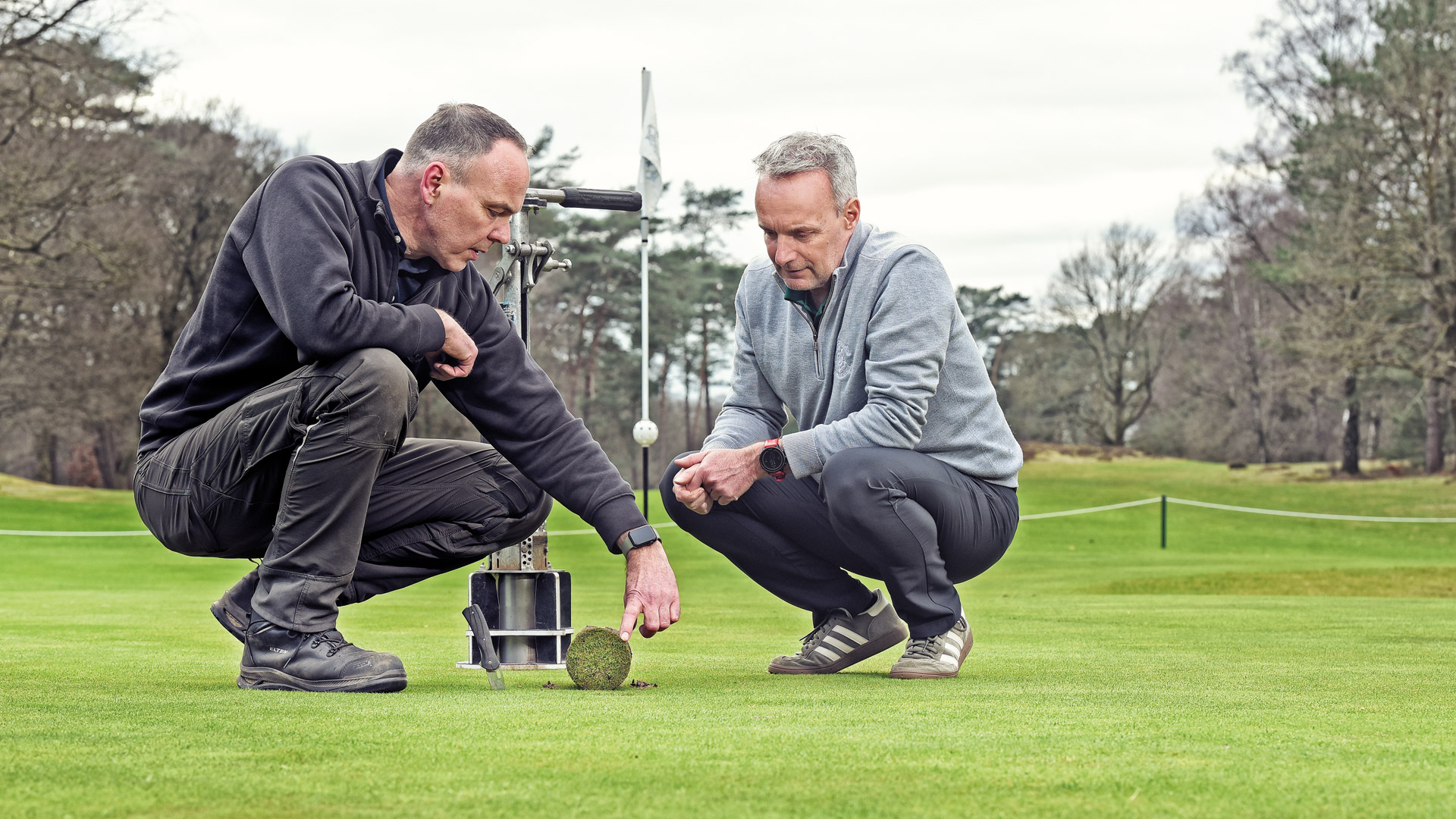
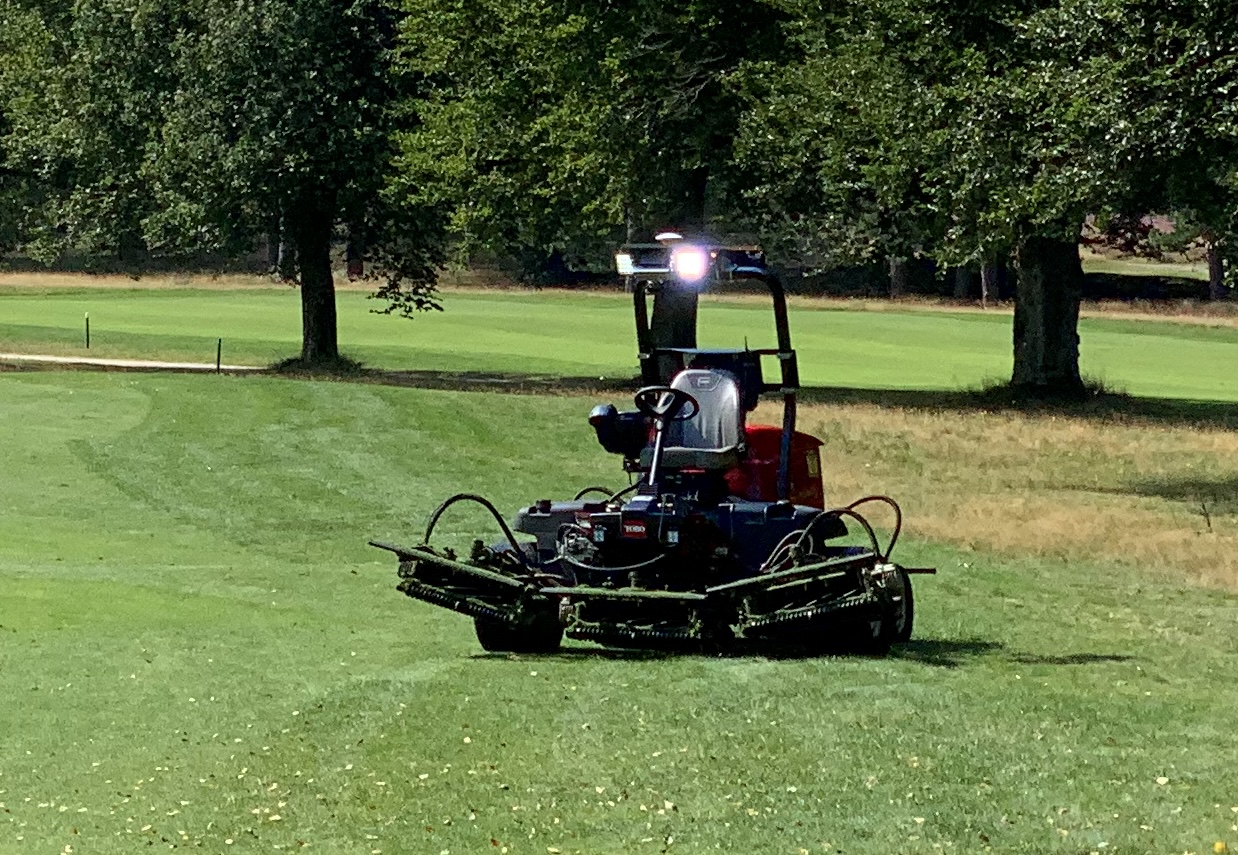
Onze greenkeepers zorgen ervoor dat de baan in alle seizoenen én onder (bijna) alle omstandigheden zo goed mogelijk bespeelbaar is. Dat gebeurt naar de laatste inzichten en met moderne machines en methodes. Er is een bosbeheerplan en een baanbeheerplan die beide worden uitgevoerd. De greens worden op 3,8 mm handgemaaid en gerold. Continu wordt de hardheid, vochtgehalte, stimp en trueness gemeten.
De Rosendaelsche Golfclub ligt in een Natura 2000 gebied en is GEO Certified.
Door enthousiaste clubleden en het inschakelen van hogeschool Larenstein werd een uitgebreide inventarisatie van flora en fauna gemaakt. De basis voor een uitgebreid GEO-rapport voor het verkrijgen van het GEO Certified. De Rosendaelsche Golfclub is al sinds 2012 GEO Certified, nu voor de vierde keer tot 2030.
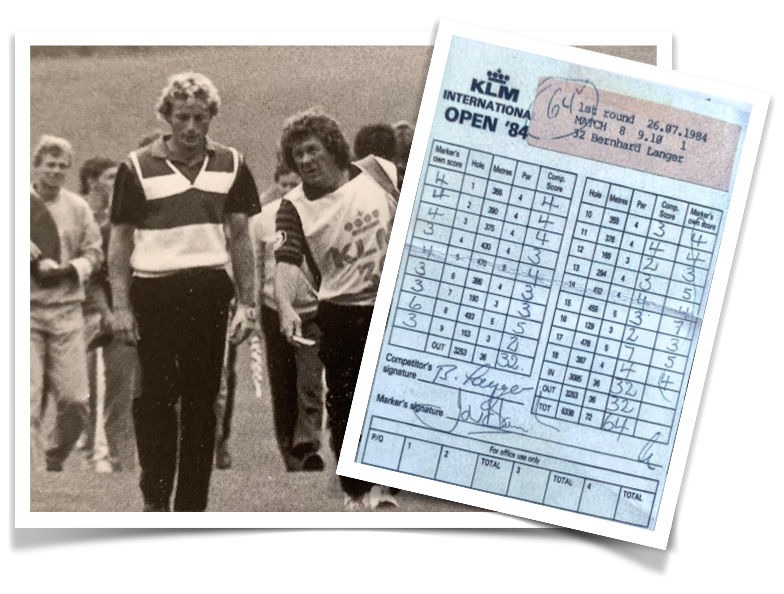
1984 oude baanrecord heren Bernhard Langer = 64 strokes tijdens European Tour Dutch Open.
2020 baanrecord heren Ché de Bake = 65 strokes tijdens clubkampioenschap.
2022 baanrecord dames Stephanie Kyriacou en Sanna Nuutinen = 65 strokes tijdens LET Dutch Ladies Open.